
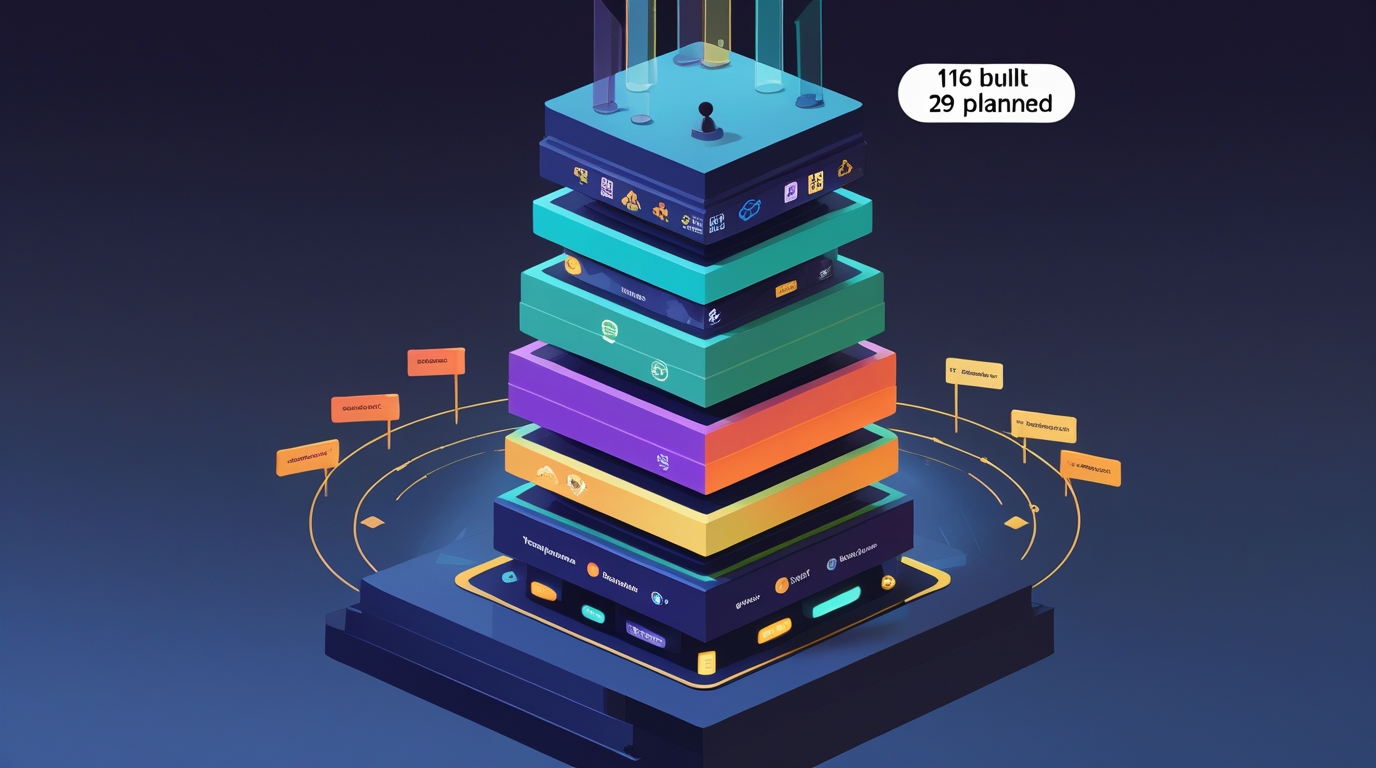
The TOS Stack — Every Tool, Every Layer
This is part of the Building TrendAI OS series. New here? Start with the Introduction Series: Building TrendAI OS
I sat down this morning and counted.
Six layers. Ten doctrines. Eight disciplines. Five venture surfaces. Twenty-something familiar tools — every one of them something you already use, or have at least heard of.
Total: 116 components live in production. 29 sized and queued. 8 still concepts.
The five-year roadmap I drew in January said we’d be here in 2030.
It’s May 2026.
One Stack, Two Views
TOS isn’t just a bunch of tools thrown together. It’s a real stack with two ways of seeing it.
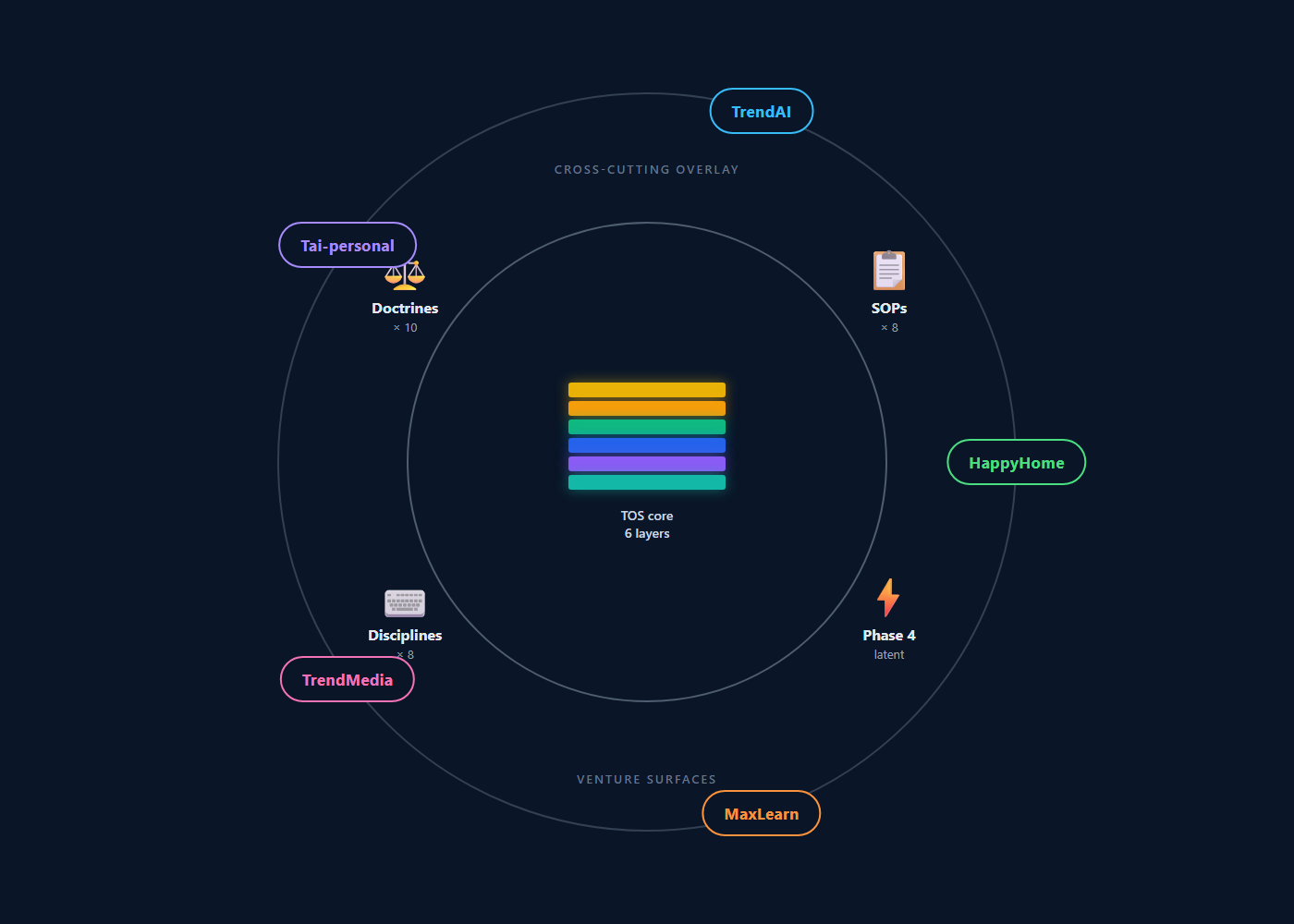
The first view is the vertical stack — six clean layers from the ground up. Substrate at the bottom, BUD Dashboard at the top. This is the OS underneath the AI OS.
The second view is the horizontal overlay — the five ventures (TrendAI, HappyHome, MaxLearn, TrendMedia, and my personal utilities) that sit on top of the core stack and actually generate value.
You don’t fully feel the second view until the first one is solid. I’ve been building both at the same time for fifteen weeks.
Layer 0 — Substrate
The unsexy foundation most solo founders skip.
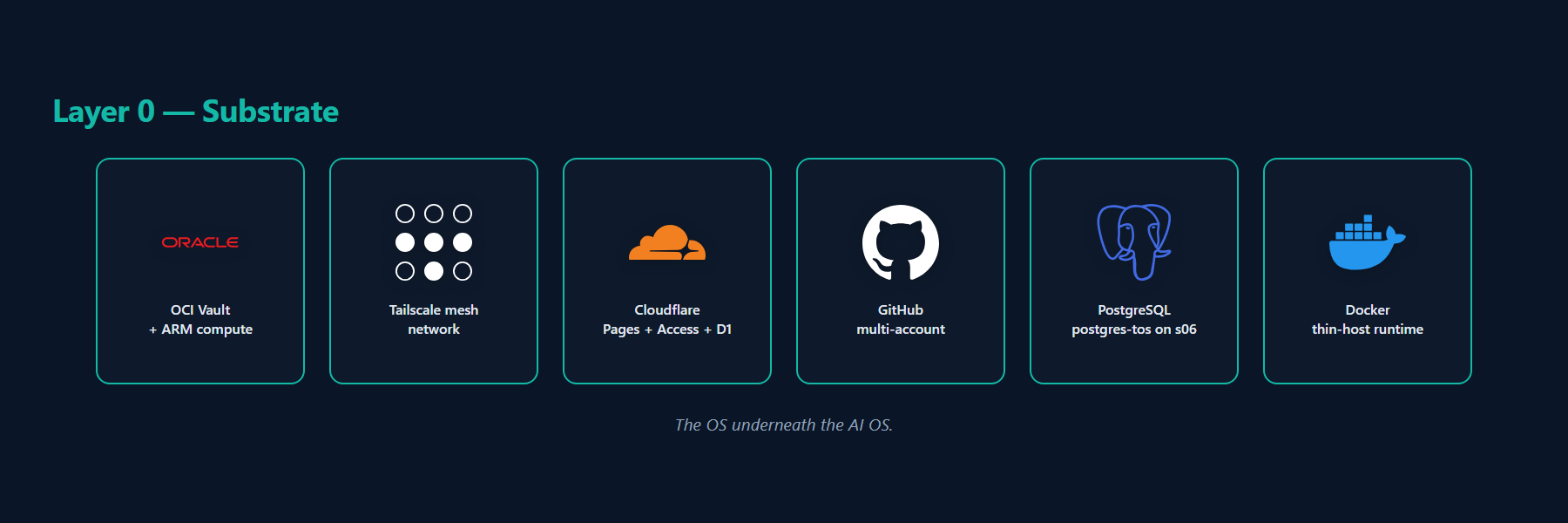
Three OCI ARM machines (s05, s06, s07) connected through a Tailscale mesh. OCI Vault as the single source of truth for 30+ secrets. Cloudflare Pages serving thirteen production sites. Cloudflare Access protecting the operator tools. PostgreSQL living safely behind the mesh. Everything runs in Docker on deliberately thin hosts.
Two doctrines govern this layer: Thin-host — the machine does five things and nothing else. Web design defaults — every site ships with back-to-top, custom favicon, and theme switcher from day one.
This is the load-bearing layer. Skip it and everything above is theatre.
Layer 1 — Reasoning Kernel
The brain. A deliberate multi-provider setup with no lock-in.
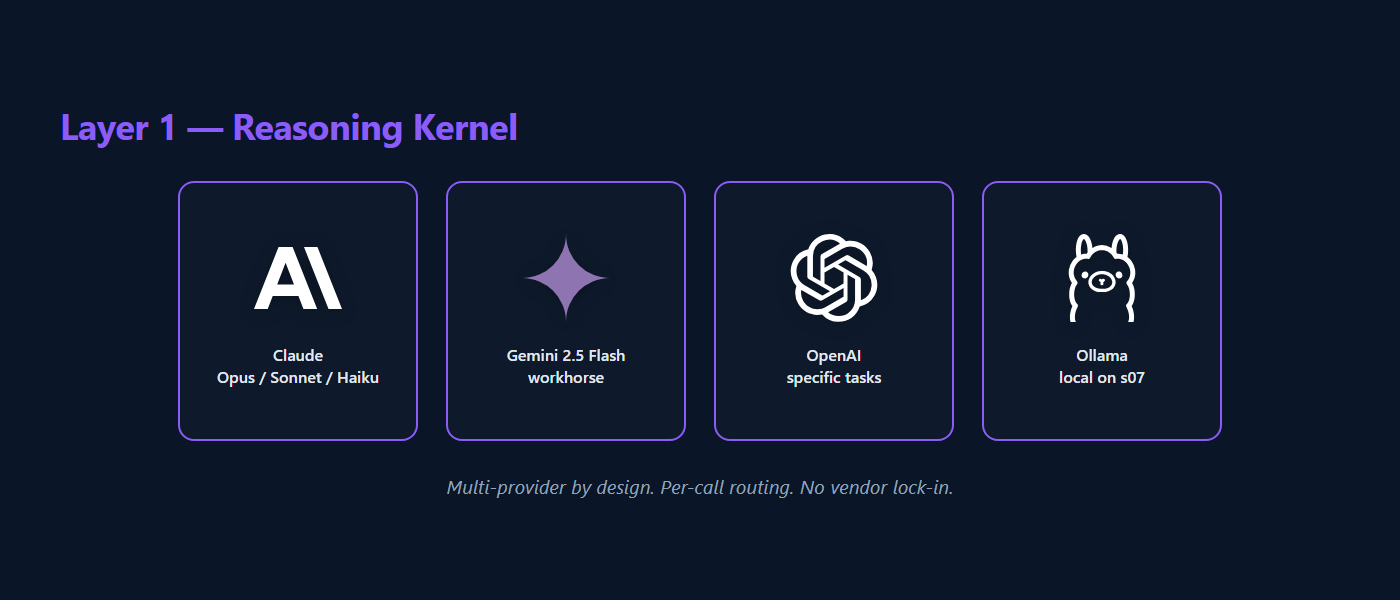
Claude (Opus 4.7 for hard problems, Sonnet 4.6 for daily work, Haiku for cheap tasks). Gemini 2.5 Flash as the high-volume workhorse. OpenAI for specific jobs. Plus two local models on s07 via Ollama.
Each task chooses its model at runtime. No fancy router yet — just honest, pragmatic selection. Capability first. Cost optimization later.
Layer 2 — Memory & Data
Where the agent remembers who we are.
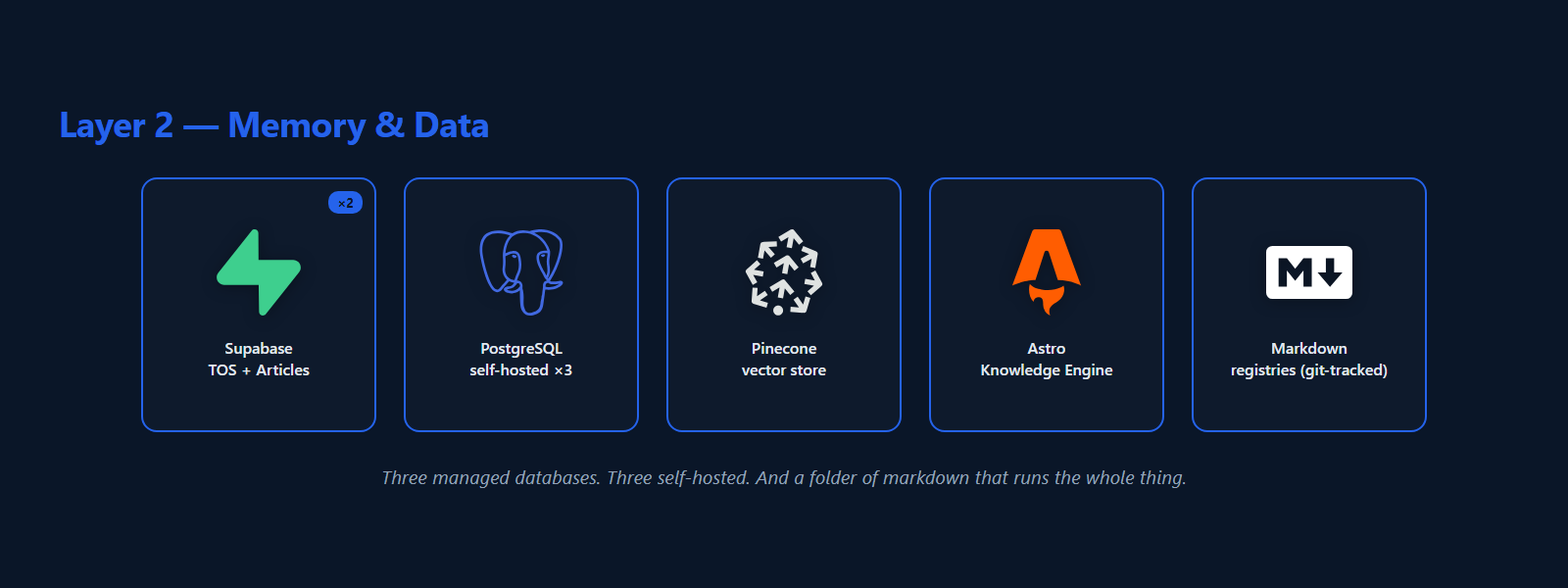
Two Supabase projects. Three self-hosted PostgreSQL databases. Pinecone for vectors. A clean Astro reader at tube.trendai.au that makes the Knowledge Engine actually usable.
And the most underrated piece: a folder of plain markdown files — resources.md, secrets-index.md, server-map.md. Git-tracked. Human-readable. Agent-readable. Still the most powerful memory system in the entire stack.
Layer 3 — Orchestration
The nervous system.
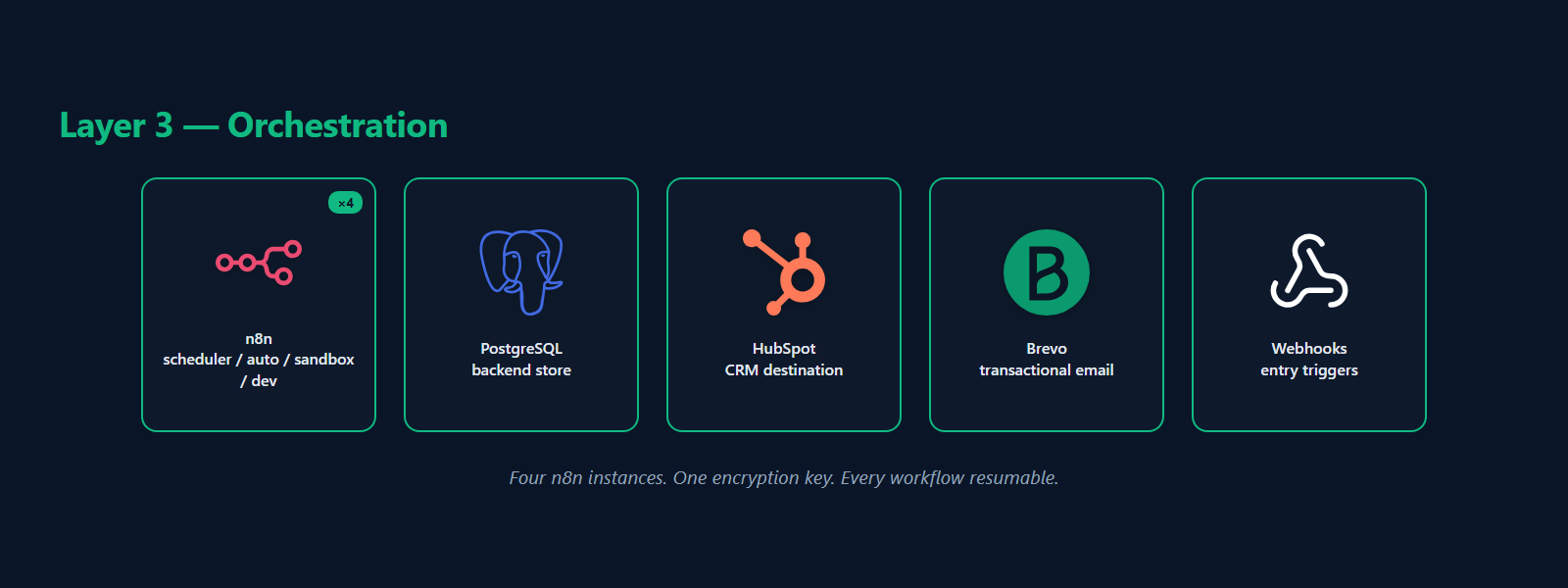
Four n8n instances (scheduler, automation, sandbox, dev). Shared encryption key. Resumable workflows. Form intake that drops everything safely into Postgres before anything else touches it.
Key doctrines born here: No Google Sheets in production and Resumable pipelines — every failure must be recoverable.
Layer 4 — Agents
The team.
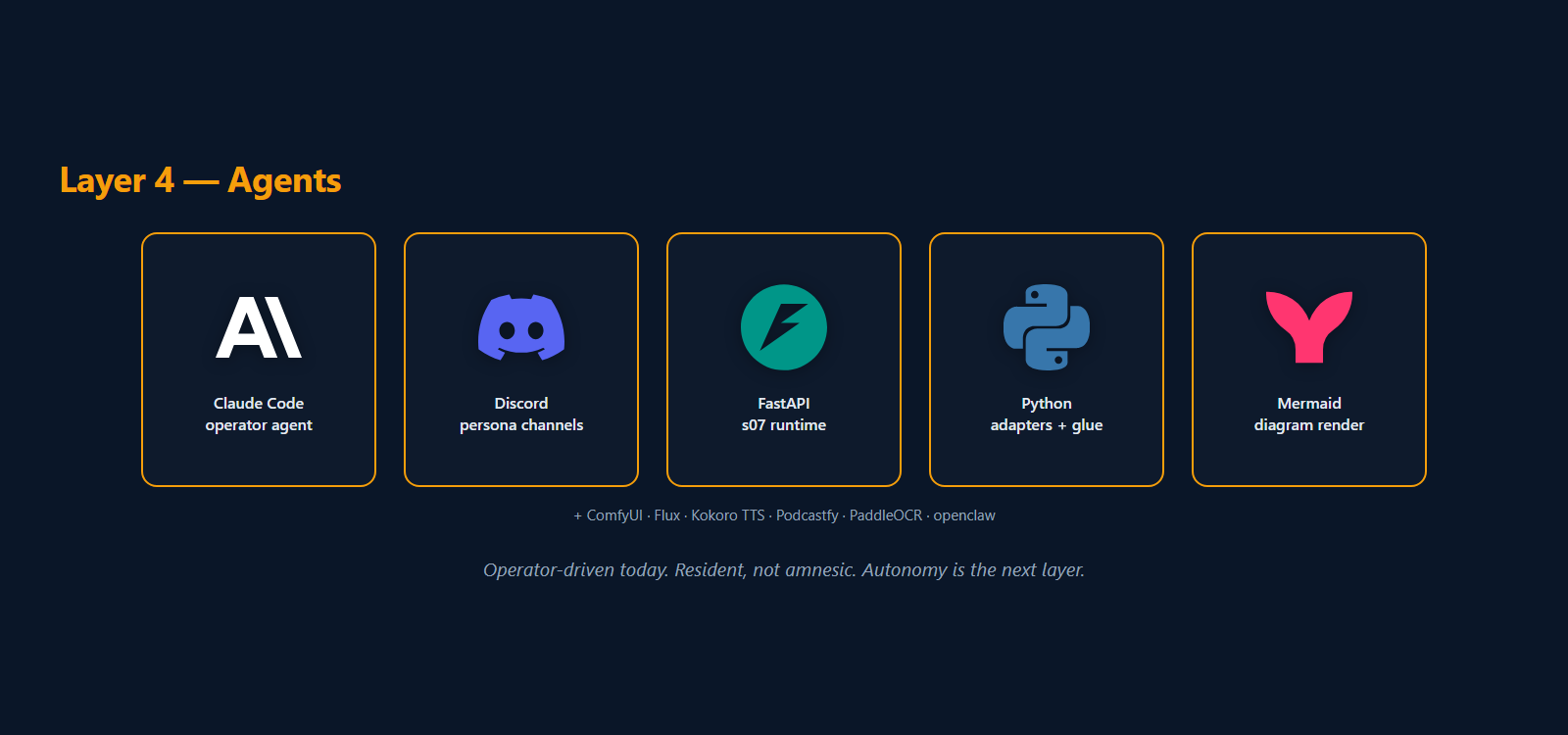
Right now the main operator is Claude Code — deeply resident in tos-docs, registries, and doctrines. The re-introduction tax is gone. Instructions stay short because the agent already knows the business.
That’s what hands-free means to me. Not voice mode. Not chair-leaning. Repeat-free.
On s07 sits the content crew: FastAPI, ComfyUI + Flux, Kokoro TTS, Podcastfy, PaddleOCR, and the Discord channels for Trinity, Neo, Jobs, and Woz via OpenClaw.
Autonomous task execution is next.
Layer 5 — BUD Dashboard
The cockpit. Where I watch instead of grind.
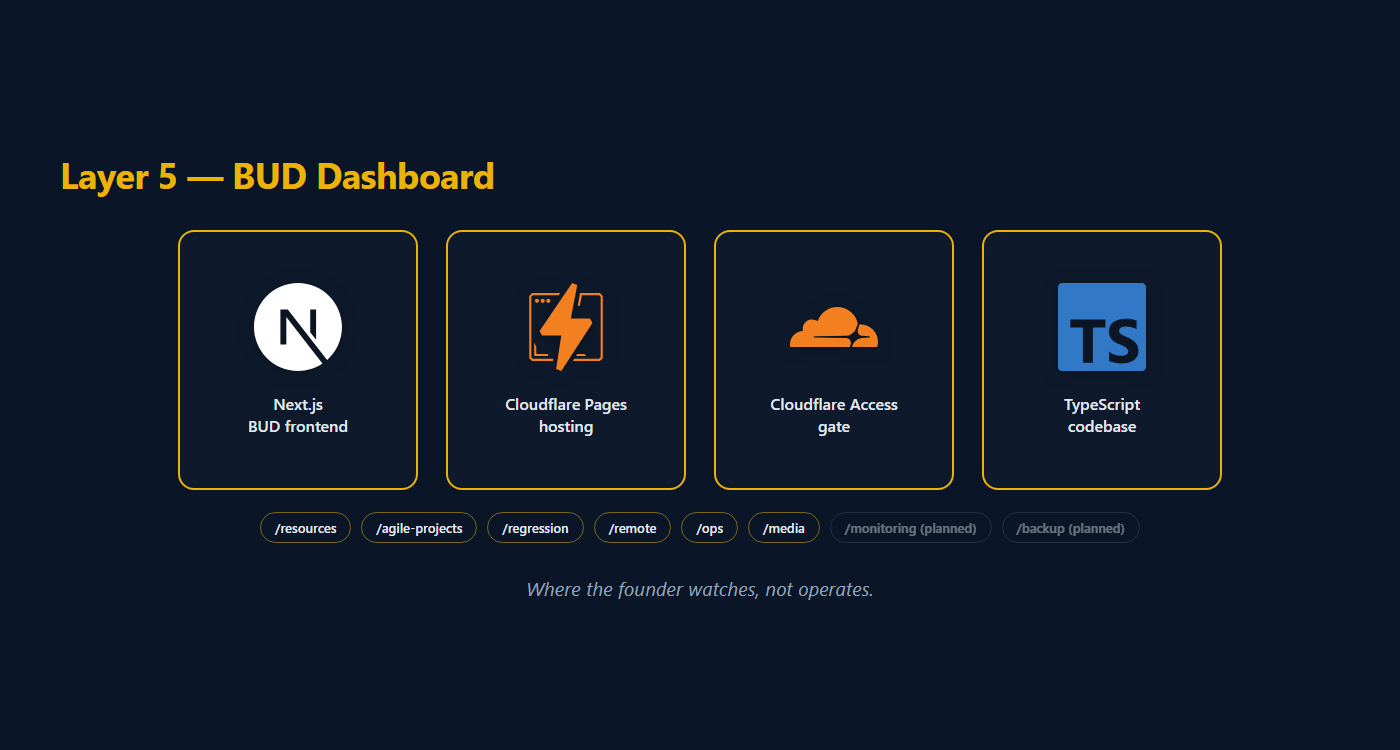
bud.trendai.au — a clean Next.js app on Cloudflare Pages, protected by Cloudflare Access. It shows resources, agile projects, regression status, media library, and ops summaries. I open it on my phone when I’m away from the desk and instantly see what’s moving.
This is where the founder directs, not operates.
The Overlay
Ten binding doctrines. Eight documented SOPs. Eight conversation disciplines (“EOD”, “Start Sprint 17”, etc.).
And the latent superpower: Phase 4 Fusion Growth — same-day idea to production. Demonstrated last Friday on taikim-finance: three hours from idea to a live, D1-backed personal expense tracker that replaced a four-thousand-row spreadsheet I’d kept for years. Now cooling into the default way we work.
The Honest Count
116 built. 29 planned. 8 concepts.
Three weeks ago the ratio was flipped. Now we’re shipping faster than we’re planning. The doctrines and substrate work from the last few sprints changed everything.
There is no flashy demo here.
The OS itself is the demo.
If you’re building your own stack, do this exercise: write down every component, layer by layer. Count them honestly. Then ask yourself — what’s actually solid, and what’s still hope?
The numbers will tell you the truth.